Policy Priority Area
Establish Resilient & Reliable Systems
Resilient transportation systems are essential to Washington state’s safety, economy, and quality of life, especially in the face of wildfires, extreme weather, and infrastructure failures.
Diversification of modes, electrification, redundant routes, and adaptable infrastructure are key components of resilient systems. When systems are robust and adaptable, they safeguard critical services like healthcare, food access, and emergency response, while minimizing economic losses and protecting supply chains. For example, every $1 invested in disaster resilience saves $6 in recovery costs, and resilient infrastructure can reduce post-disaster disruptions by up to 50%. Building this resilience requires coordinated planning that integrates transportation, land use, environmental science, and emergency preparedness to ensure communities can withstand and recover from disruption stronger and more connected than before.
Jump to State Policy Goals: Economic Vitality & Environment

I. State Policy Goal: Economic Vitality
To promote and develop transportation systems that stimulate, support, and enhance the movement of people and goods to ensure a prosperous economy.
According to WSDOT, the state’s transportation system facilitates the movement of over $700 billion in goods annually. In key industries such as agriculture, manufacturing, and tech, 1.5 million jobs are directly tied to freight dependent industries. Reliable transportation supports businesses by reducing shipping costs, increasing supply chain efficiency, and improving market access for manufacturing, agriculture, and other sectors, as well as supporting the growing tourism industry. When transportation infrastructure is compromised due to flooding, wildfires, seismic activity, or other system failures, the economic costs can be staggering. Disruptions to transportation could ripple out, affecting businesses, jobs, tourism, and access to critical services.
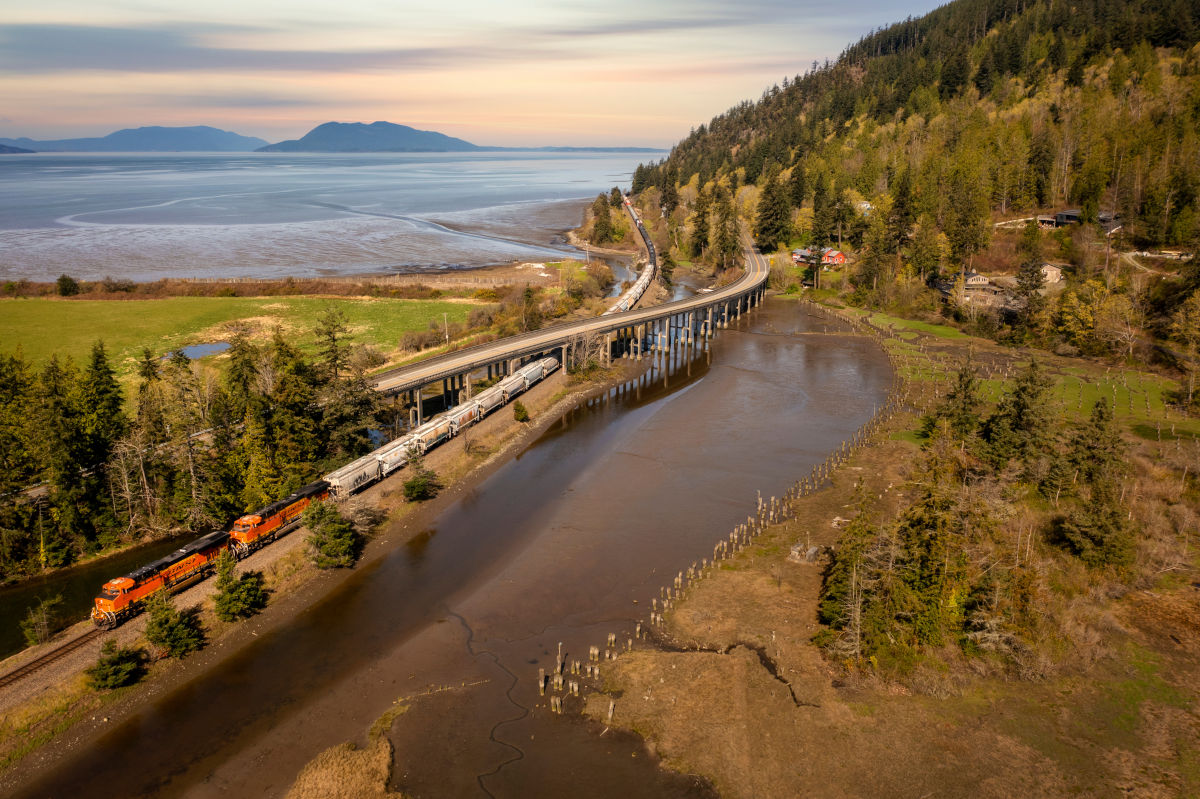
A train travels through Whatcom County
Objectives
Protect freight-critical infrastructure
Ensure key freight routes and associated infrastructure are insulated in the long-term from weather, seismic, and development pressures.
Increase transportation efficiency and capacity
Enhance the reliability and volume of goods movement by reducing bottlenecks, supplying additional truck parking and rest locations, and supporting alternative fuels and electrification.
Invest in a future-ready workforce
Provide the necessary training, skills assessment, and succession planning to equip our workforce to manage and maintain a 21st-century transportation system.
Fact:
Heavy rain and flooding can close highways, trigger landslides, and delay freight shipments. In 2007, flooding on I-5 caused $47 million in losses from the disruption alone.
Strategies
Increase coordination in local land use planning processes to reduce encroachment on Essential Public Facilities, such as airports, marine terminals, freight rail lines, passenger rail, and other key infrastructure as defined in Washington’s Growth Management Act.
RCW 36.70A.200 describes essential public facilities as those that are typically difficult to site, such as airports, state education facilities, and state or regional transportation facilities as defined in RCW 47.06.140, which outlines transportation facilities and services of statewide significance. Unplanned development near important transportation facilities can lead to operational conflicts, safety hazards, and limitations on future expansion. Anticipated growth across the state will increase conflict points, and new strategies, partnerships, and collaborations are needed that facilitate growth while protecting the functionality and capacity of these vital transportation assets.
Support technologies that increase the efficiency and sustainability of freight movement, such as queue management systems for trucks waiting to access ports, and solutions to address the challenges of last mile freight delivery.
Reducing congestion and wait times not only improves the flow of goods but also lowers emissions from idling vehicles. Implementing real-time information systems, appointment scheduling, and optimized gate operations can significantly enhance the efficiency of freight logistics. Investing in these technological solutions will contribute to a more competitive and environmentally sustainable supply chain. Furthermore, the increase in online shopping and expectations for ultra-fast delivery has made addressing last-mile freight delivery challenges vitally important. Innovative solutions to get packages to their final destination in urban areas may include smart lockers, smaller fulfillment centers, smaller electric vehicles and electric cargo bikes, autonomous delivery services, and other innovations.
Develop a West Coast Transportation Network Plan to integrate the long-range planning efforts of California, Oregon and Washington, with a focus on minimizing travel disruptions due to extreme weather and seismic risks.
A coordinated regional approach for the West Coast can identify critical vulnerabilities and develop shared strategies for enhancing the resilience of the tri-state transportation network, in the shorter term, as well as longer term solutions like West Coast high speed rail connections. A West Coast Transportation Plan would identify how the three states can work better together to test new technologies, identify common risks, and overcome challenges that extend beyond state boundaries. Collaborative planning will ensure a more reliable and resilient transportation system for the entire West Coast. The Washington State Transportation Commission is studying the potential benefits of different approaches.
Develop transportation career centers that support near-term and long-term transportation workforce training aimed at preparing workers to fill vital roles needed today, use emerging technology, and begin transition from legacy transportation related careers.
The transportation sector faces short-term workforce challenges, with fewer technicians available than are needed to maintain our system and operate our transportation vehicles, including bus operators. In the longer-term, the transportation industry is also undergoing rapid technological advancements, including automation, electrification, and data analytics, requiring a skilled workforce to implement and maintain these innovations. These career centers can provide training programs, apprenticeships, and upskilling opportunities to ensure a pipeline of qualified workers. By proactively investing in workforce development, we can support the adoption of new technologies and create high-quality jobs in the transportation industry.
Identify and support existing general use airports, including community and regional airports, that serve as a key transportation asset during times of emergency, prioritizing preservation needs, ensuring extreme weather preparedness, and exploring solutions for long-term financial viability.
Washington has over 100 general-use airports, which play a crucial role in facilitating the movement of emergency personnel, firefighters, and supplies, and supporting medical evacuations. Rural airports also provide important air cargo service for local agriculture and manufacturing industries. Airports’ infrastructure must be protected from deterioration. Ensuring they can continue to operate under adverse weather conditions is paramount. Exploring advanced and automated air transportation systems, new funding mechanisms, and partnerships can help secure their long-term sustainability and ability to serve as critical community resources.
Support the state’s economic competitiveness in international trade by helping to ensure Washington’s ports are equipped to handle larger ships, both non-cargo and cargo, through improved waterways, port operations, and supportive freight rail and trucking infrastructure.
Modernizing port facilities, deepening channels, and expanding storage capacity are essential to accommodate the evolving needs of global shipping. Simultaneously, investments in intermodal connectors, rail yards, and efficient trucking routes are necessary to move goods inland quickly and effectively. Washington state has the most trade dependent economy in the United States, with roughly 40% of jobs tied to international commerce. The Ports of Seattle and Tacoma are actively implementing improvements, with several channel deepening and terminal modernization projects. These strategic improvements will also allow for cruise ships and other vessels, strengthening Washington state’s position as a key gateway for international trade and tourism and sustaining our vital industries.

II. State Policy Goal: Environment
To enhance Washington state’s quality of life through transportation investments that promote energy conservation, enhance healthy communities, and protect the environment.
As Washington state works toward its goal of becoming carbon neutral by 2050, resilient transportation systems play a crucial role in environmental sustainability. With transportation responsible for 40% of the state’s greenhouse gas (GHG) emissions, the resilience of transportation systems must go hand in hand with decarbonization efforts. Wildfires, intensified by hotter summers and longer fire seasons, result in road closures, deteriorated air quality, and widespread evacuations. The area burned by wildfires in Washington has nearly tripled since the 2000s and may triple again by the 2040s.
Through smart design choices, green construction practices, and by encouraging more environmentally sustainable modes, our investments can create systems that support both mobility and long-term ecological sustainability. Environmentally responsible transportation policies prioritize sustainable infrastructure, energy-efficient transit systems, and smart land use planning to reduce sprawl and dependence on single-occupancy vehicles.
Investments in clean technologies, such as electric vehicles, renewable energy-powered transit, and green infrastructure, help lower emissions and decrease resource consumption. However, resilience in the context of environmental challenges is not just about reducing emissions. It is about adapting to the impacts of a changing climate. Flooding, wildfires, and rising sea levels threaten critical infrastructure, particularly along coastal areas and flood-prone regions.
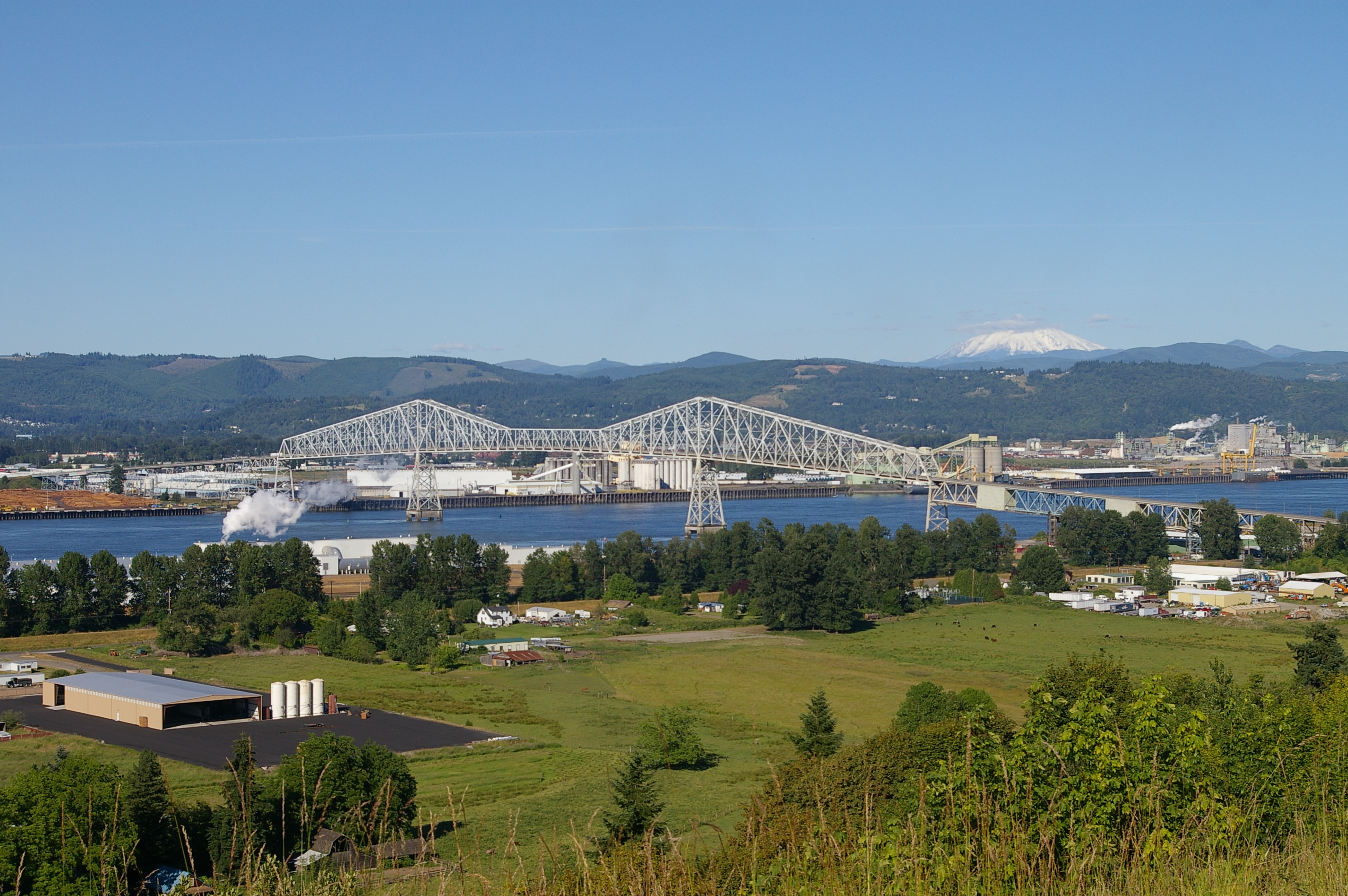
Lewis and Clark Bridge in Longview
Objectives
Reduce the transportation sector’s annual greenhouse gas emissions to achieve net zero emissions by 2050
Support the transition to zero-emission and low-emission technologies, shift to lower emission modes, and transition towards renewable energy sources.
Bolster the resilience of the transportation network
Identify vulnerabilities and support improvements to mitigate impacts of severe weather and other disruptions to infrastructure and communities.
Promote quality of life and environmental justice
Address the unique environmental challenges and mobility needs of lower-resourced communities.
Fact:
Wildfires, intensified by hotter summers and longer fire seasons, result in road closures, deteriorated air quality, and widespread evacuations. The area burned by wildfires in Washington has nearly tripled since the 2000s and may triple again by the 2040s.
Strategies
Support projects that, in addition to meeting other state transportation goals, provide public health, resiliency, habitat connectivity benefits, and urban heat reduction benefits.
Integrated projects offer a more efficient use of resources by addressing multiple needs simultaneously. For instance, restoring a coastal wetland can enhance natural flood protection while also creating valuable habitat and improving water quality. Permeable and ‘cool’ pavement combined with proper vegetation, trees, and bioswales along roadway corridors can reduce urban heat island effects, create habitat for animals and insects, and limit stormwater runoff. Promoting habitat connectivity through wildlife crossings also improves roadway safety. By focusing on these synergistic solutions, we can maximize the return on investment and build more resilient and sustainable communities.
Support priorities contained in state, regional, and local resilience plans, and advance projects that address the most critical climate vulnerabilities and emergency preparedness needs.
Resilience plans present a consensus driven understanding of the most pressing risks and outline locally tailored strategies for mitigating and adapting to the risks. Aligning transportation investments with these established priorities ensures that resources are directed toward the most urgent needs, such as expanding electric vehicle infrastructure and energy capacity, protecting critical infrastructure from inland flooding, or enhancing evacuation routes in wildfire prone areas. This collaborative approach strengthens regional resilience and avoids duplication of efforts. Washington state, as well as Skagit County and other jurisdictions, are currently developing Resilience Improvement Plans.
Incentivize inter-jurisdictional collaboration to implement state, regional, and local climate mitigation and resilience plans.
Lower-income and rural communities often face disproportionate impacts from climate change and pollution due to historical development practices and limited resources. Providing technical assistance and funding for vulnerability assessments, climate action plans, and emergency preparedness planning can empower these communities to better understand and prepare for risks. Furthermore, supporting the development and implementation of localized greenhouse gas reduction strategies, such as expanding electric vehicle infrastructure, ensures that the transition to a cleaner transportation system is achieved in communities that need it the most.
Strengthen energy and transportation planning through expanded collaboration between transportation agencies and utility providers, in order to advance proactive solutions, such as the placement of renewable energy generation in public right of way.
Closer coordination can unlock opportunities for innovative solutions that benefit both the transportation and energy sectors. For example, transportation agencies can provide land for solar energy installations along highways, generating clean power and potentially reducing energy costs. Washington state is currently exploring policy changes needed to accommodate solar projects in highway rights of way.
Electric vehicles can also be used as energy storage systems, providing grid stabilization in times of uncertainty and mobile charging stations during emergencies. This integrated planning approach can accelerate the transition to a cleaner energy system and enhance the sustainability of the transportation network.
Support approaches to transition heavy-duty trucks and freight rail to zero-emission technology, such as shifting from diesel-powered vehicles to electric or hydrogen fuel cell alternatives and developing in-state production and supply chain capabilities.
Decarbonizing the freight sector is crucial for achieving significant reductions in greenhouse gas emissions and improving air quality. Strategies could include offering financial incentives for the adoption of zero-emission vehicles, investing in charging or refueling infrastructure along major freight corridors, and supporting research and development of advanced battery and fuel cell technologies.
One example of this strategy, which could be expanded and continued, is Washington State’s Zero Emissions Medium & Heavy Duty Vehicles Incentive Program.9 The Puget Sound Zero Emission Truck Collaborative released a blueprint containing 70 strategies to help eliminate seaport-related emissions by 2050. A focused effort in this sector, which accounts for significant portion of greenhouse gas emissions and pollutants that are harmful to human health, will yield substantial environmental and public health benefits.
Technology Spotlight: Electric Vehicles Charging Infrastructure
The transition to electric vehicles (EVs) is one of the most significant steps Washington can take to reduce GHG emissions. To maximize the impact, investments in charging infrastructure will need to continue and grow over time. Washington State’s Clean Energy Fund estimates that by 2030, Washington will need approximately 1,000 more fast charging stations to meet the growing demand.
Goals & Stategies
Our Statewide Policy GoalsThe Road AheadAppendicesPolicy Priority Areas